Why Authentic Singapore Education Is Different From Singapore-Inspired Education
Bangkok’s international school landscape has grown significantly over the past decade, and with it, the number of schools that describe their curriculum as Singapore-style, Singapore-inspired, or aligned with the Singapore education framework. For parents who have identified Singapore’s education model as the right choice for their child, this proliferation of options presents a genuine challenge: how do you know whether a school is delivering authentic Singapore education, or simply using Singapore’s name to position itself in a competitive market?
This is not a trivial distinction. The quality of your child’s education, and the extent to which it delivers the outcomes Singapore’s system is known for, depends entirely on whether the school is implementing the model in substance, or referencing it in marketing.
What “Singapore-Inspired” Usually Means
When a school describes itself as Singapore-inspired, it typically means one or more of the following: it uses Singapore’s Mathematics curriculum or textbooks; it has structured its academic programme around some of Singapore’s pedagogical principles; or it has adopted elements of Singapore’s curriculum framework while supplementing it with content or approaches from other systems.
All of these are of value. Singapore’s Mathematics curriculum, for example, is widely regarded as one of the most effective in the world, and schools that adopt it sincerely are giving their students a meaningful advantage in that subject. Singapore’s pedagogical principles (structured learning, the concrete-pictorial-abstract approach, mastery before acceleration) are grounded in robust research and produce measurable results when applied properly.
But adopting individual components of a system is not the same as implementing that system. Singapore’s education model works as a coherent whole: its curriculum design, its teacher development framework, its approach to assessment, its commitment to holistic development, and its underlying values framework are all interconnected. A school that selects elements from this system without the infrastructure to implement and sustain them is likely to produce inconsistent results.
What Authentic Singapore Education Requires
Authentic Singapore education requires three things that cannot be acquired through curriculum licensing or the purchase of textbooks.
The first is teachers who are trained and assessed against Singapore’s professional teaching standards. Singapore’s teaching profession is one of the most rigorously developed in the world. Teachers in Singapore’s national schools are trained within a structured professional framework, the Singapore Teaching Practice, that defines what effective teaching looks like at every stage of a lesson, from lesson design and classroom culture through to student feedback and assessment. A school that claims to offer Singapore education but whose teachers have not been trained and assessed against these standards is not delivering Singapore education in any meaningful sense.
The second is ongoing academic oversight by educators with genuine experience in Singapore’s school system. Singapore’s curriculum is not static. It is formally reviewed and updated every three to five years by MOE, and the changes reflect new research in learning science, evolving global competency requirements, and Singapore’s own assessment of what its students need to be prepared for. A school that is genuinely aligned with Singapore’s system needs educators who understand these updates and can ensure the school’s curriculum and practice remain current.
The third is institutional integrity, a school culture, leadership structure, and set of professional commitments that reflect Singapore’s educational values at every level, not only in the classroom. Singapore’s emphasis on holistic development, character education, student well-being, and the professional growth of teachers is not a set of add-ons to the academic programme. It is embedded in how the entire school operates.
The Role of Principals Academy Inc (PAI)
Principals Academy Inc (PAI) is the Singapore institution involved in professional development of teachers and the training of school leaders and educators outside of Singapore. Established in 2003 through a partnership between the Academy of Principals Singapore and the Economic Development Board of Singapore, PAI works in close collaboration with Singapore’s Ministry of Education and various educational and professional institutions in Singapore. It administers over 100,000 student assessments annually, including Singapore’s Admissions Exercise for International Students.
For a school outside Singapore to be genuinely aligned with Singapore’s education system, not merely inspired by it, the most credible foundation is a direct, structural relationship with an institution of PAI’s standing. Not an endorsement, not an affiliation, but a founding partnership that embeds Singapore’s professional standards into the school’s hiring, training, curriculum, and governance from the ground up.
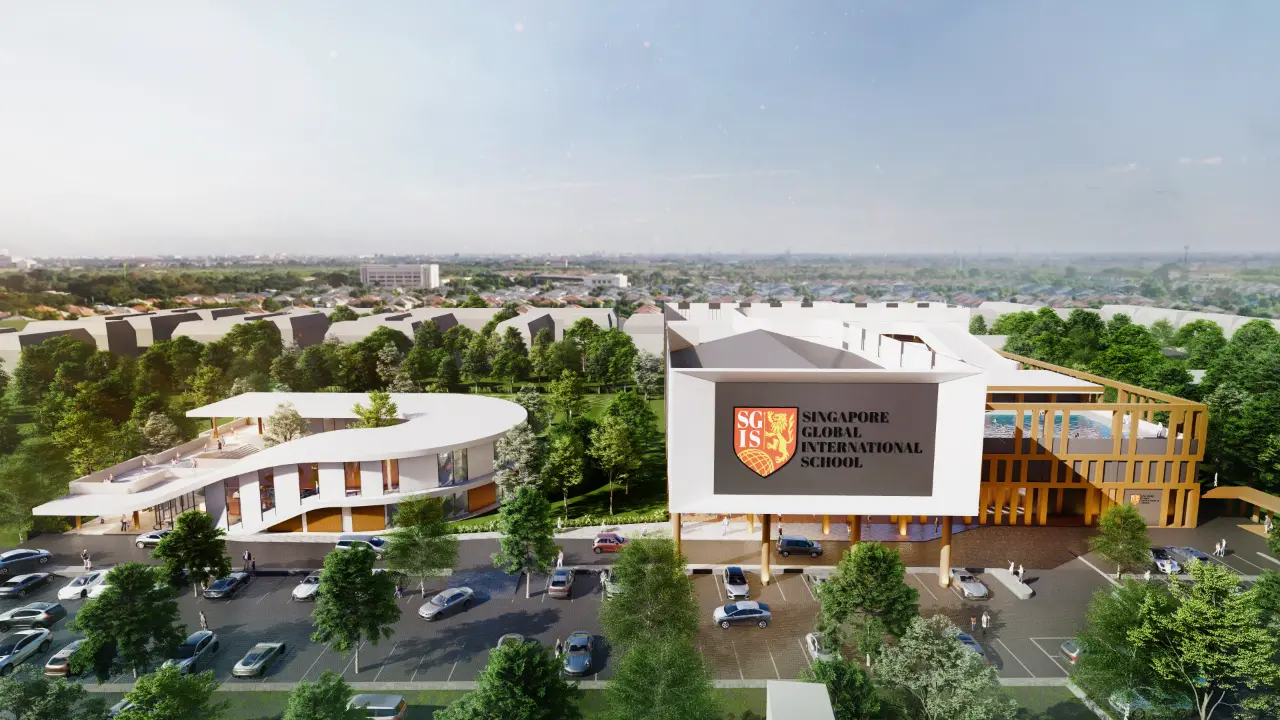
This is the relationship that exists at Singapore Global International School. SGIS is co-founded by PAI. Every teacher appointed to SGIS is interviewed, trained, and certified by PAI against Singapore Teaching Practice standards before entering the classroom. Academic oversight is provided by PAI’s advisory bench of experienced Singapore educators, some of whom are former principals of institutions including Raffles Institution and National Junior College. The curriculum adopted at SGIS is Singapore’s refreshed national framework, not a derivative or an interpretation of it.
Why the Distinction Matters for Your Child
The difference between authentic Singapore education and Singapore-inspired education is not merely a matter of branding. It is a matter of what your child actually experiences in the classroom each day, and what they are prepared for when they leave.
A child educated in an authentic Singapore environment, by teachers trained to Singapore’s professional standards, within a curriculum framework maintained by educators who understand the system from the inside, will develop the academic foundations, competencies, and values that Singapore’s system is designed to produce. These are the outcomes that the international evidence consistently associates with Singapore-educated students: strong performance in Mathematics and Science, genuine intellectual curiosity, the capacity for critical and independent thinking, and the values and social-emotional skills to engage constructively with others.
The Question Every Parent Should Ask
When evaluating any school that claims a Singapore curriculum or Singapore-style education, there is one question that cuts through the positioning quickly: who trained and certified your teachers, and against what standard?
If the answer is a recognised Singapore institution with direct ties to MOE and NIE standards, and if professional development is a mandatory requirement for every teacher rather than an optional credential for some, that is a meaningful signal of substance.
At SGIS, the answer to that question is PAI as the standard is Singapore’s own.
To learn more about Singapore Global International School and our founding partnership with Principals Academy Inc., visit sgisedu.com.